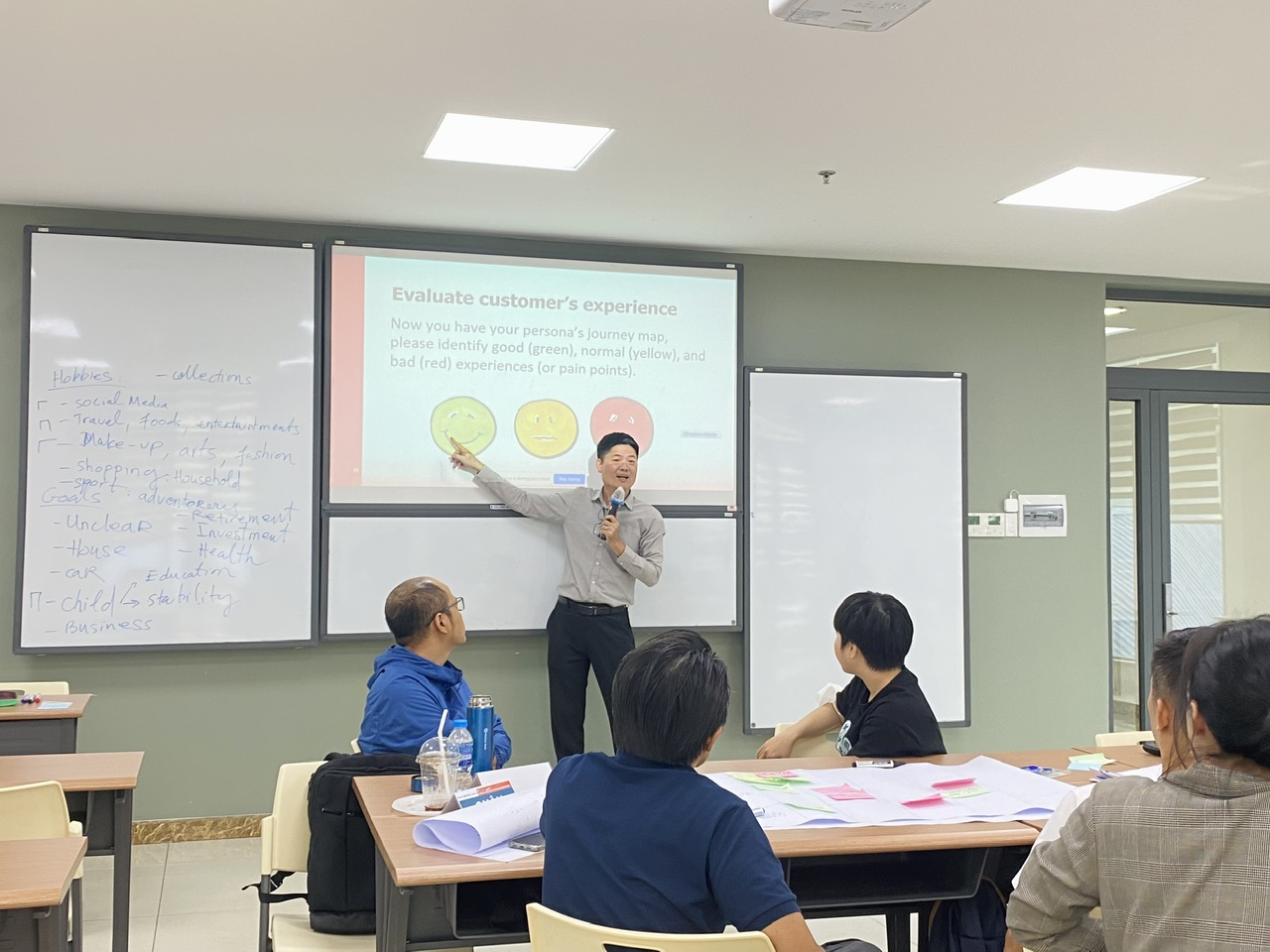
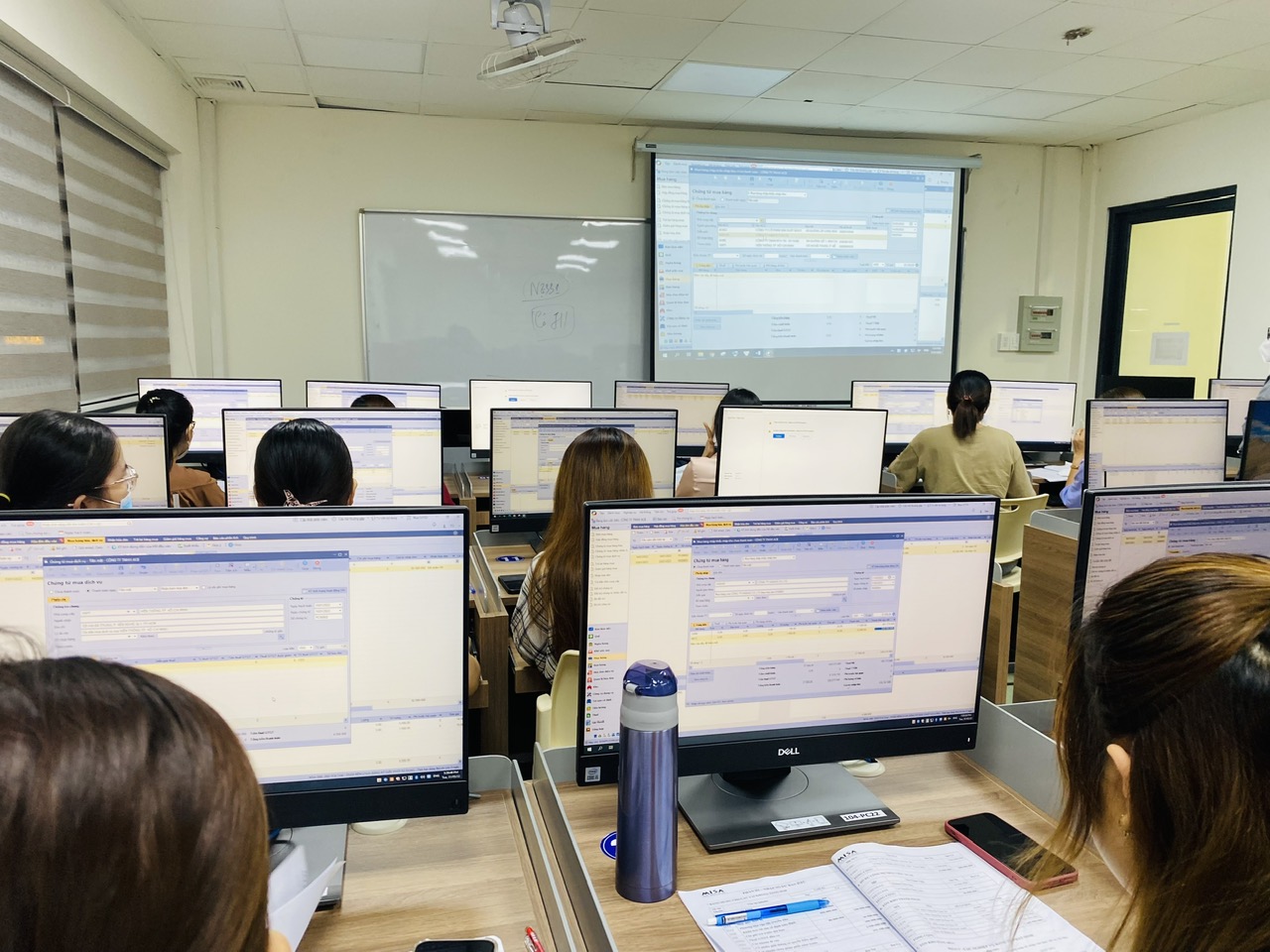
The Corporate Financial Accounting course is designed by the Institute of Human Resources and Business Development (HUREDIN) to equip participants with the essential knowledge and skills required for professional accounting practice.

The Corporate Financial Accounting course is designed by the Institute of Human Resources and Business Development (HUREDIN) to equip participants with the essential knowledge and skills required for professional accounting practice.

The program is designed to achieve the following objectives:
Empower learners to master and effectively apply the essential knowledge, skills, tools, and practical experience required for professional accounting roles.
Bridge the gap between theory and practice by providing participants with the necessary competencies to excel in real-world accounting environments.
This course is designed for:
Individuals with no prior background in accounting who seek to acquire the foundational knowledge and practical experience necessary to pursue a professional career in the field.
Final-year students majoring in Accounting or Finance who wish to enhance their career readiness by gaining practical training and real-world professional insights.
| No. | MODULES | DURATION
(Sessions) |
| 1 |
Principles of Accounting1. Subjects, methods, and accounting principles. 2. Accounting reports (Aggregation – Balance). 3. Accounts and double-entry bookkeeping. 4. Valuation of accounting subjects. 5. Accounting vouchers and inventory taking. 6. Accounting ledgers – Forms of accounting – Financial statements. 7. Accounting for major business processes. 8. Practical exercises. |
7 |
| 2 |
Applied Financial Accounting1. Accounting for Cash and Receivables: Cash on hand, Accounts Receivable, and practical exercises. 2. Accounting for Advances: Employee advances, Prepaid expenses, Pledges, deposits, and collateral; practical exercises. 3. Accounting for Inventory and Tools: Inventory, Raw materials, Tools, and practical exercises. 4. Accounting for Payroll and Staff Payables: Principles, vouchers, accounts, and accounting methods; practical exercises. 5. Accounting for Fixed Assets: Tangible and Intangible fixed assets, Depreciation, and practical exercises. 6. Cost Accounting based on Actual Costs: Cost aggregation, costing procedures, Work-in-Progress (WIP) valuation, and costing methods; practical exercises. 7. Accounting for Merchandising: Principles, vouchers, accounts, and methods; practical exercises. 8. Accounting for Revenue, Expenses, and Profit Determination: Revenue from sales and services, Selling and Administrative expenses, other activities, and Net Income determination; practical exercises. |
12 |
| 3 |
Practical Accounting Cycle & Financial Reporting1. Accounting Vouchers: Concepts, legal nature, classification, and workflow. 2. Instructions on opening accounting ledgers – Practical exercises. 3. Instructions on bookkeeping (Manual and Computerized) – Practical exercises. 4. Instructions on closing accounting ledgers – Practical exercises. 5. Preparation of Financial Statements: Balance Sheet, Income Statement, Cash Flow Statement, and Notes to the Financial Statements; practical exercises. 6. Document retention periods. 7. Q&A and sharing of real-world experiences. |
3 |
| 4 |
Accounting on MISA Software1. Introduction to MISA Accounting Software: Installation, data creation, modules overview, user permissions, and data management. 2. Practical Training: Declaring master data and opening balances; data entry for transactions in each module. 3. Data Processing: Adjusting entries, data review, closing profit and loss, and reconciling data before printing books and preparing Financial Statements. 4. Reporting. 5. Instructions on issuing and canceling E-invoices. 6. Q&A and sharing of real-world experiences. |
6 |
| 5 |
Tax Declaration Practice1. Value Added Tax (VAT). 2. Corporate Income Tax (CIT). 3. Personal Income Tax (PIT). 4. Instructions on tax declaration using HTKK software. 5. Q&A and sharing of real-world experiences. |
2 |
| TOTAL SESSIONS | 30 | |
All-inclusive Training Fee: 6,500,000 VND / participant.
(The fee includes training materials, the final examination, and certification).
COURSE INFORMATION:
IMPORTANT NOTES: To ensure training quality, each class is strictly limited to a maximum of 40 participants. Due to high demand, seats are typically filled well in advance. To secure a spot in your preferred intake, we recommend completing the tuition payment at least one month prior to the commencement date.
Disclaimer: Please note that the curriculum, number of sessions, and tuition fees are subject to adjustment starting from March 2026.
Graduation Certificate: Upon completion of the course, qualified students will be awarded a Graduation Certificate issued by the Institute of Human Resources and Business Development (under the University of Economics Ho Chi Minh City – UEH), which is valid nationwide.
Note: Total discounts are capped at a maximum of 20% of the tuition fee.

Campus B: 279 Nguyen Tri Phuong Street, Dien Hong Ward, Ho Chi Minh City.
Institute of Human Resources and Business Development (HUREDIN) – Room B2.005, Building B2, Ground Floor. (Next to the Faculty Parking Gate – Opposite No. 43 Dao Duy Tu Street)
ADVISORY & CONTACT INFORMATION
ZALO:
OFFICE HOURS:
Available from Monday to Friday:
Start date: 04/03 & 14/03 & 18/03
Schedule: Sat/Sun Mornings & Afternoons or Mon/Wed/Fri Evenings
Time: Evening classes: 18:00–20:30 (or 19:00–21:00 depending on location); Weekend classes: 8:30–11:00 & 13:00–15:30
Duration: 34 sessions


Commencement date
Commencement date
Commencement date

Commencement date

Commencement date

Commencement date